

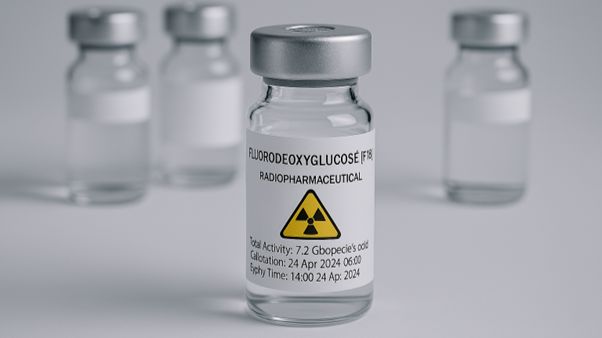
A standard market screen of Southeast Asia's radiopharmaceutical infrastructure returns a familiar picture: a growing cyclotron count across the region's major economies, projected double-digit CAGRs in nuclear medicine, and a handful of named operators in each country. The picture is accurate as far as it goes. It also misses the structural reality. Few of those installed cyclotrons hold sustained GMP certification. Fewer still sit within a viable distribution radius of the patient populations they could serve. Fewer again have built the commercial architecture — hospital contracting, payer accreditation and downstream PET operations — that turns production capacity into a business. And only a small set of operators have moved beyond FDG, the entry-level diagnostic tracer, into the specialty isotope economics — Gallium-68, Lutetium-177, Actinium-225 — that the global category is moving toward. The gap between the installed cyclotron count and the commercially viable radiopharmaceutical business count is the investment thesis.
A cyclotron is a particle accelerator — capital equipment for converting non-radioactive atoms into radioactive ones. It is the start of the radiopharmaceutical production chain, not the end of it. Each of the four constraints above is harder to clear than the one before. Most installed facilities across Southeast Asia have not cleared all four. Some have not cleared the first.
The first constraint is regulatory. Good Manufacturing Practice (GMP) for radiopharmaceuticals does not apply to the cyclotron itself. The standard applies to everything that happens after the cyclotron: the radiochemistry that converts the radioisotope into a usable tracer, the synthesis modules and hot cells in which this happens, the quality control testing performed on every batch within minutes of production, the documentation that satisfies inspection, and the qualified personnel who run the entire chain. GMP for radiopharmaceuticals is uniquely demanding. It combines pharmaceutical-grade sterile manufacturing with the constraints of working with radioactive materials whose useful life is measured in hours. There is no pause-and-retest opportunity — a batch that fails quality control in real time is a batch that decays before it can be remade. This requires daily process consistency, sustained inspection readiness, and an operational discipline few institutions in any sector can maintain at length. It is also the gate where the gap between installed and operational opens widest. Across Southeast Asia, numerous cyclotron programmes have a thin track record of achieving and sustaining commercial GMP standing. In the Philippines, the Nuclear Medicine Research and Innovation Center, designed to host a publicly owned cyclotron and PET/CT facility under the Philippine Nuclear Research Institute, broke ground in 2022 with a target completion date of 2023. It remains incomplete. In IAEA-tracked facility data on Philippine cyclotrons, only one is explicitly recorded as GMP certified.
The second constraint is geographic, and ultimately it is physics. Fluorine-18, the radioisotope behind the FDG that accounts for roughly 95 percent of global PET tracer volume, has a half-life of 109.8 minutes. Within two hours of production, half of every dose has decayed; within four hours, three-quarters. A dose that takes too long to reach the patient is not a degraded product — it is no product. In a developed market with reliable highway and air-freight networks, this constraint can be managed; hub-and-spoke distribution from regional cyclotrons supplies PET centres several hundred kilometres away. In Southeast Asia's archipelagic geographies, the constraint is more severe. Road-based distribution from a Metro Manila cyclotron serves a bounded urban catchment; cross-island delivery to Cebu or Davao requires air transport, which changes the scheduling complexity, the failure-mode risk, and the unit economics. The same problem appears across Indonesia's 17,000 islands and along Vietnam's elongated geography. A cyclotron's commercial market is not its country. It is its dependable transport radius. This is also why first-mover positions in radiopharmaceutical distribution prove unusually defensible — if a single GMP-certified operator is the only viable supplier within a transport radius, customers in that radius have no practical alternative source.
The third constraint is commercial. Production capability and distribution reach do not, by themselves, constitute a business. The commercial architecture of a viable radiopharmaceutical operation involves several layers that have to be deliberately built: customer contracting with hospitals and PET centres, accreditation with health maintenance organisations and insurance payers that determines the addressable patient volume, increasingly a downstream owned PET-imaging operation that captures both production and scan revenue, and an operating model that delivers the throughput required to cover the high fixed costs of cyclotron operation. A cyclotron facility with limited patient throughput across its distribution network cannot recover capital costs, qualified staff, GMP compliance overhead, and consumables on a per-dose basis. Production capacity that is not matched by structured demand is not an asset — it is a fixed cost. The operators in Southeast Asia that have built genuine commercial businesses are those who constructed these layers in parallel, rather than treating the cyclotron installation as the project and the commercial structure as a downstream concern.
The fourth constraint is the most commercially differentiating, and the least discussed. Almost every cyclotron in Southeast Asia produces FDG — the basic glucose-analogue tracer used in routine PET imaging. FDG is the entry point of the radiopharmaceutical stack, and increasingly its commodity floor. As cyclotron capacity expands in any market, FDG dose pricing compresses. There is a limit to how much margin any operator can defend on a product where the basic supply chain is widely replicable. The value sits higher in the stack. Gallium-68, used in PSMA-targeted prostate cancer imaging and somatostatin receptor imaging in neuroendocrine tumours, commands several times the per-dose pricing of FDG. Targeted F-18 tracers, including the F-18 PSMA agents that increasingly compete with Ga-68 in PET diagnostics, sit in a similar premium band. Lu-177 PSMA therapy — the asset behind Pluvicto's near-USD 1 billion in first-year sales — generates per-patient revenue at multiples of diagnostic dose pricing, given the multi-cycle treatment courses involved. Actinium-225, the alpha emitter behind much of the M&A activity now reshaping this category, sits in a different tier again. These specialty isotopes are not optional add-ons. They are the products that justify the capital intensity of the asset class and the only ones positioned to capture the wave of capital now flowing in. An operator producing only FDG is participating in the most competitively exposed layer of the business.
The number of facilities in Southeast Asia that have cleared all four constraints — GMP certified production, viable distribution geography, structured commercial architecture, and a specialty isotope mix beyond FDG — is small. The number that have cleared three of four is larger but still narrow. The figure that appears in market reports counts the rest. For investors tracking this category, the practical consequence is that the asset base is significantly narrower than the cyclotron count implies; the operators that have crossed all four constraints are structurally differentiated in ways that cannot be replicated on a short timeline, and the small number of transactions involving genuinely complete assets is the universe that matters.
KPA works with investors, acquirers and operators evaluating and developing radiopharmaceutical infrastructure across Southeast Asia. The four constraints described above describe the operational reality of the assets we work with — the difference between installed capacity and an operating business is where our work is grounded, across venture building, project advisory and capital structuring in the region.